
📅 Posted: October 30, 2026
|
🔄 Updated: October 30, 2026
|
⏱️ Reading Time: 06.00 Min Read
Hand Washing Bras Without Stretching Elastic Or Losing Shape
Bras deal with more daily pressure than their delicate appearance suggests. Bands stretch around the body, straps carry tension, cups hold their shape, and lace or decorative details face sweat, body oils, and friction. Throwing every bra into a rough wash cycle can shorten the life of those carefully constructed parts.
I have a soft spot for lingerie that looks slightly dangerous, especially anything involving bold straps, leather-inspired details, or dramatic lace. Even so, nothing kills the attitude faster than pulling a beautiful bra from the wash and finding one cup looking confident while the other appears to have given up entirely. Gentle washing keeps the drama where it belongs.
Table Of Contents For Hand Washing Bras
Preparing Bras For A Safer Hand Wash
Good results begin before the bra touches water. Start by checking the care label, especially on bras with moulded foam, adhesive details, embroidery, leather-look trims, or unusual decorative finishes. Separate pale colours from dark or strongly dyed pieces because colour transfer can happen during soaking.
Fasten hooks before washing so they cannot catch on lace, mesh, or decorative straps. Check the underwire channels for small tears and inspect embellishments for loose threads. Water and movement can make existing damage worse, so a quick inspection can prevent a minor problem becoming a ruined bra.
Use a clean basin or sink and fill it with cool or lukewarm water. Hot water can be hard on elastic fibres and may affect some dyes, adhesives, and padding. Add a small amount of mild detergent suitable for delicate garments, then mix it through the water before adding the bras.
Preparation also includes thinking about what happens after washing. Bras need enough clean space to dry fully before they return to a drawer, especially padded and moulded styles. A sensible approach to storing lingerie properly helps protect the cup shape and keeps freshly cleaned pieces away from damp or crowded conditions.
The Hand Washing Method That Protects Shape And Elastic
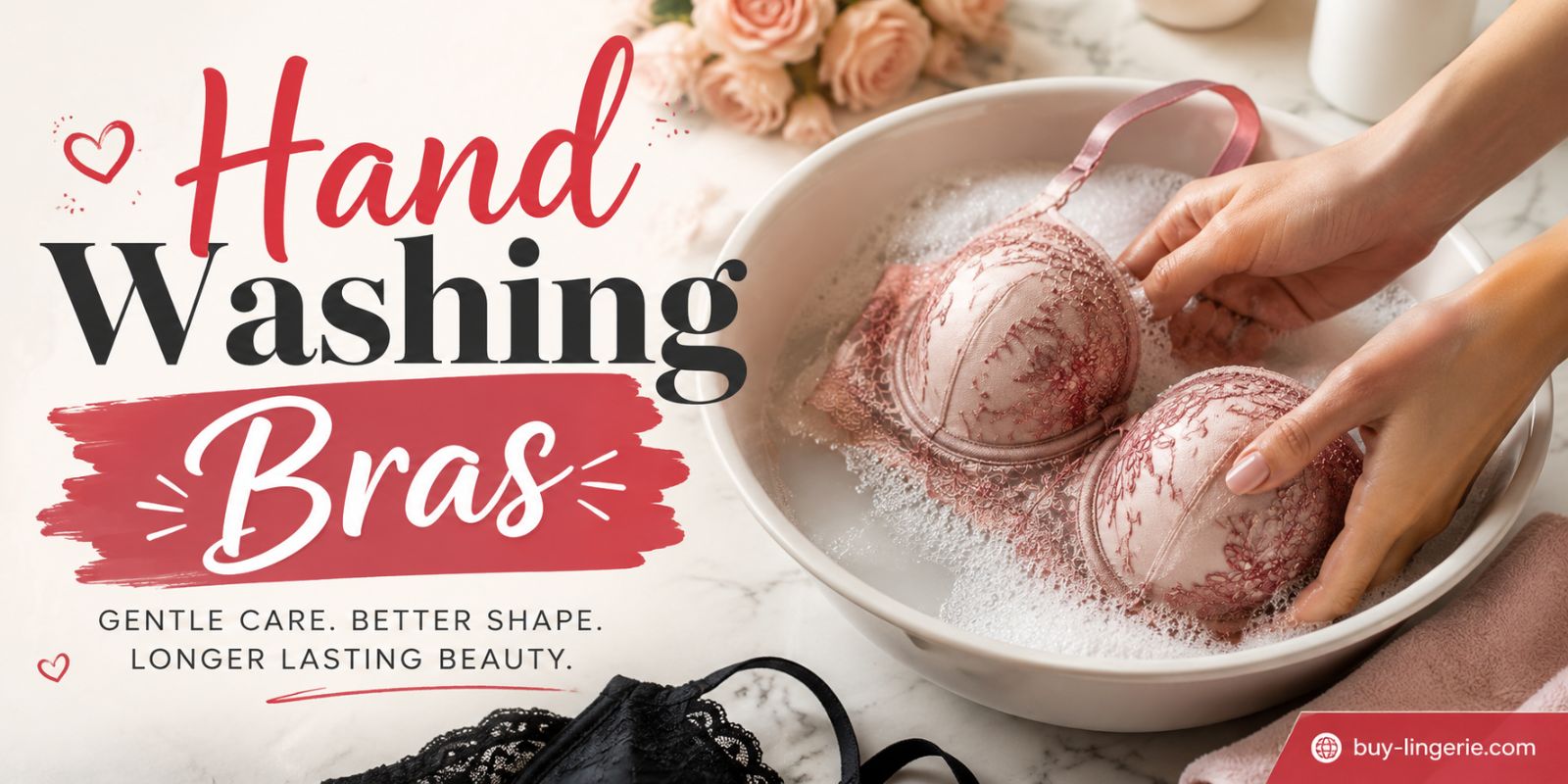
Place the bras in the prepared water and move them gently so every part becomes wet. Use your fingertips on areas that collect body oils and sweat, but avoid scrubbing, twisting, or stretching the band. Bras with decorative panels need lighter handling, and the same care used when washing lace lingerie can help protect delicate edges, overlays, and fine details.
Handle each bra as a complete garment rather than pulling individual parts in different directions. Support moulded cups, keep straps loose, and avoid rubbing fabric against fabric. This controlled approach helps the bra keep its structure while still allowing water and detergent to reach areas that need cleaning.
Washing Mistakes That Stretch Cups, Straps, And Bands
A wet bra needs careful handling because water adds weight to its fabric and structure. Wringing, twisting, and lifting it by one strap can pull several parts out of alignment. Support the whole bra when moving it and press out water gently instead of forcing it from the fabric.
Modern lingerie trends often combine sheer fabrics, lace, decorative straps, padding, and structured details. These mixed constructions can react differently during washing, so checking the care label and treating the most delicate material carefully can prevent avoidable damage.
Common hand washing mistakes to avoid:
- Using hot water that can weaken elastic and affect colour.
- Pouring detergent directly onto dry cups or delicate fabric.
- Leaving dark and pale bras soaking together.
- Scrubbing sweat marks with a brush or rough cloth.
- Using fabric softener that may leave a coating on fibres.
- Leaving bras forgotten in dirty wash water for extended periods.
Drying Bras Without Crushing Cups Or Weakening Elastic
After rinsing, place the bra on a clean towel and press gently to remove excess water. Reshape padded or moulded cups while they are damp, straighten the straps, and return the band to its natural position before leaving the bra to air dry.
Different lingerie types use different fabrics, padding, and support structures, so their drying needs can vary. Keep bras away from tumble dryers, heaters, and strong direct heat, and give heavier styles enough support while they dry.
My wife has a habit that I once found amusing but now completely respect. She checks every cup and strap before leaving a bra to dry, then gives me a warning look if I place anything on top of it. Considering some of her favourite bras have survived years of regular wear, I have stopped questioning the ritual and started keeping my hands away from the drying area.
Building A Washing Routine That Keeps Bras Wearable Longer
Bras need washing based on how they are worn rather than following one strict schedule. Heat, sweat, long wear, and close skin contact can mean earlier washing, while a bra worn briefly may need less frequent cleaning. Rotating several bras also gives bands and straps time to recover between wears.
Watch how a bra feels after washing and during wear. Stiffness or a coated texture can point to detergent residue, while a riding band, exposed wire, cracked elastic, or permanently distorted cup usually signals physical wear. An extra rinse can solve residue, but worn construction eventually needs replacement.
My wife has a far better bra rotation system than I could ever invent. I once thought she was being overly organised until she explained exactly which bras were resting, waiting for washing, or ready to wear. Meanwhile, I was standing there holding one dramatic strappy bra and wondering how something with so little fabric could require such impressive administration. A consistent routine may sound boring, but it keeps favourite bras looking good and saves delicate pieces from emergency rescue washes.
Keep Beautiful Bras Looking As Good As They Feel
After learning the right approach to hand washing bras, a detailed piece deserves the same thoughtful care. The Baci Embroidered Strapless Convertible Bra combines embroidered cups with versatile strap options, making gentle washing and careful reshaping especially important for keeping its seductive look and supportive structure.

FAQs About Hand Washing Bras
What water temperature should I use for hand washing bras?
Use cool or lukewarm water unless the care label states otherwise. Hot water can place extra stress on elastic and delicate materials.
How long should I soak a bra before rinsing it?
A short soak is usually enough for everyday buildup. Follow the care label and avoid leaving delicate bras soaking for hours.
Why does my bra still feel soapy after rinsing?
Too much detergent may be trapped in layered fabric or padding. Rinse again in clean, cool water until the slippery feeling disappears.
How should I dry a padded bra after hand washing?
Press it gently inside a clean towel, reshape the cups, and air dry with proper support. Keep it away from direct heat.
What should I do if my bra changes shape after washing?
Reshape the cups and straighten the band while the bra is damp. Persistent distortion may indicate damaged foam or overstretched construction.


